Collection Management
as a Service
Let your users track, organize, and manage their card collections through your app. Every card linked to full catalog data. No card database to build. No data entry workflows to design. Just plug in and ship collection features.
What You Get
A complete collection management backend, ready to integrate. Every endpoint you need to let users create collections, add cards, track progress, and organize their hobby — without building any of it from scratch.
Collection CRUD
Create, organize, and manage multiple collections per user. Name them, describe them, tag them — your users structure their hobby however makes sense to them.
Card Tracking
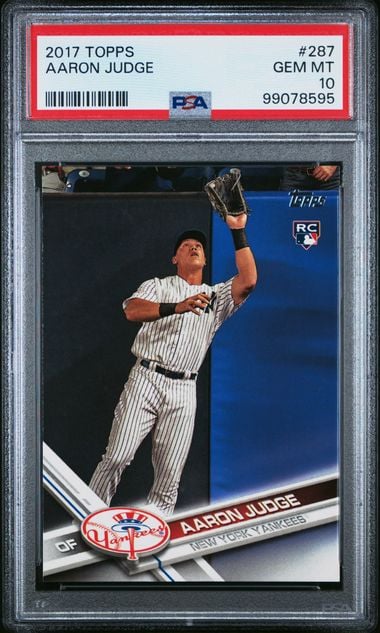
Add cards with condition, grade, purchase price, and notes. Every entry captures what collectors actually care about when managing their inventory.
Portfolio Organization
Organize by sport, set, player, or custom categories. Let users slice and dice their collection however they think about their cards.
Set Completion Tracking
Show which cards a user has versus what they still need for any set. From 1933 Goudey to 2026 Topps Chrome — every set in the catalog is trackable.
Wishlist Management
Track cards your users want to add. Wishlists integrate with the full catalog so every desired card comes with complete metadata and market context.
Multi-User Support
Each collector gets their own private collections. Built for platforms with thousands of concurrent users, not just single-player hobby tools.
Built on the 15M+ Card Catalog
Collection management without a card database is just a glorified spreadsheet. Every card in a CardSight collection is linked to full catalog data — set information, parallel details, player data, card number, year, and manufacturer. Your users never type in card names manually. They never guess at set names. They never wonder which parallel they are holding.
No Manual Data Entry
Building a collection management feature without a card catalog forces your users to type in every detail by hand — card names, set names, years, card numbers, parallel types. That leads to typos, inconsistencies, and an experience that feels like filing taxes instead of enjoying a hobby.
With CardSight, users add cards by scanning them with the Identification API or searching with the Catalog API. Either way, every field is populated automatically from the canonical catalog record. Clean data from the start, no cleanup needed later.
Three Services, One Platform
- Identification API
User snaps a photo. CardSight identifies the card with 99.5% accuracy. The identified card links directly into their collection.
- Catalog API
User searches by player, set, or year. Full catalog data returns instantly. They tap to add the card to their collection with all metadata attached.
- Collection API
Manages the collections themselves — CRUD operations, card tracking, set completion, wishlists. The storage and organization layer for everything identified or searched.
The result: your users scan or search, tap to add, and their collection is instantly populated with complete, accurate card data. No manual entry. No guesswork. No bad data to clean up later.
What You Can Build
Collection management is the foundation of nearly every trading card application. Whether you are building a personal hobby tool or a platform serving thousands of collectors, the same API powers it all.
Personal Portfolio Trackers
Apps that help collectors track what they own and monitor its value over time. Users add cards as they acquire them, record purchase prices, and watch their portfolio performance — like a brokerage account for trading cards.
Set Builders
Tools that show completion progress and surface exactly what is still needed. Collectors working through a 660-card base set can instantly see their progress percentage, missing card numbers, and estimated cost to complete.
Shop Inventory Systems
Card shops managing stock across locations. Track what is in the display case, what is in the back room, and what just sold — with every card linked to full catalog data for accurate descriptions and pricing.
Investment Monitors
Tracking card values over time for investment purposes. Combine collection data with market pricing to show return on investment, identify trending cards, and make data-driven buying and selling decisions.
Simple API, Powerful Results
Clean, RESTful endpoints that do exactly what you expect. Create a collection, add cards, query contents, track completion — every operation is a straightforward API call. No complex setup, no configuration files, no schema migrations on your end.
import { CardSightAI } from 'cardsightai';

const client = new CardSightAI({ apiKey: 'your_api_key_here' });

// Create a collection
const collection = await client.collections.create({
  name: "My Rookie Cards",
  description: "First-year cards from top prospects",
  isPublic: false,
  collectorId: "collector_uuid"
});

// Add cards to the collection
await client.collections.cards.add({
  collectionId: collection.data.id,
  cards: [{
    cardId: "card_abc123",
    condition: "NM",
    buyPrice: "45.00",
    buyDate: "2024-01-15",
    notes: "Pulled from hobby box"
  }]
});

// Get collection analytics
const analytics = await client.collections.analytics(
  collection.data.id
);

console.log(`Total cards: ${analytics.data.totalCards}`);
console.log(`Total value: ${analytics.data.totalValue}`);
console.log(`Total spent: ${analytics.data.totalSpent}`);
RESTful Design
Predictable endpoints, standard HTTP verbs, JSON responses. If you have built with any modern API, you already know how to use this one.
Type-Safe SDKs
Strong typing across Node.js/TypeScript, Python, Swift, Java, and .NET. Catch errors at compile time and get autocomplete in your IDE.
Production Ready
99.9% uptime SLA, global CDN, and infrastructure that scales with your user base. Ship with confidence from day one.
Explore Our Platform
Collection management works best with identification and catalog access. Combine all three for a complete platform.
Card Identification
Snap a photo, get instant card identification. 99.5% accuracy across 8,250+ sets.
Slab Identification
Read the slab, not just the card. Grading company, grade, and qualifiers from any photo.
Streaming Video
Real-time card identification from live video streams. Enterprise only.
Price Data
Real marketplace sales and live listings. Data, not opinions. Live for every sport, Pokémon TCG, and One Piece TCG.
Card Catalog
15M+ trading cards from 1933 to present. The most comprehensive card database available via API.
Frequently Asked Questions
Common questions about CardSight AI's collection management capabilities, data requirements, and integration.
No. Every card added to a collection is linked to CardSight AI's 15M+ card catalog. When a user adds a card — whether by scanning it with the Identification API or searching the Catalog API — the collection entry automatically inherits full metadata including card name, set, year, card number, player, and parallel details. You never need to build, maintain, or populate your own card database.
The API compares the cards in a user's collection against the complete checklist for any set in the catalog. It returns the total cards in the set, how many the user owns, their completion percentage, and a list of missing card numbers. This works across all 8,250+ sets in the catalog, from 1933 Goudey to modern releases.
Yes. Each user can create and manage as many collections as they need — organized by sport, era, player, investment strategy, or any other criteria. Collections are private to each user, and the API supports multi-user access at platform scale.
Each card entry in a collection supports condition (e.g., Near Mint, Excellent), grading company and grade (e.g., PSA 10), purchase price, acquisition date, and free-text notes. All of this is in addition to the catalog metadata (card name, set, year, player, parallel) that is automatically linked from the 15M+ card database.
Yes, when you combine the Collection Management API with CardSight's Identification API. A user takes a photo of a card, the Identification API returns the card identity with 99.5% accuracy, and you use that result to add the card to their collection with a single API call. This scan-to-collect workflow eliminates manual data entry entirely.
There is no hard limit on the number of cards per collection. The API is designed for collectors with small personal portfolios as well as card shops managing thousands of items in inventory. Performance remains consistent regardless of collection size.
Tap any question to expand
No. Every card added to a collection is linked to CardSight AI's 15M+ card catalog. When a user adds a card — whether by scanning it with the Identification API or searching the Catalog API — the collection entry automatically inherits full metadata including card name, set, year, card number, player, and parallel details. You never need to build, maintain, or populate your own card database.
The API compares the cards in a user's collection against the complete checklist for any set in the catalog. It returns the total cards in the set, how many the user owns, their completion percentage, and a list of missing card numbers. This works across all 8,250+ sets in the catalog, from 1933 Goudey to modern releases.
Yes. Each user can create and manage as many collections as they need — organized by sport, era, player, investment strategy, or any other criteria. Collections are private to each user, and the API supports multi-user access at platform scale.
Each card entry in a collection supports condition (e.g., Near Mint, Excellent), grading company and grade (e.g., PSA 10), purchase price, acquisition date, and free-text notes. All of this is in addition to the catalog metadata (card name, set, year, player, parallel) that is automatically linked from the 15M+ card database.
Yes, when you combine the Collection Management API with CardSight's Identification API. A user takes a photo of a card, the Identification API returns the card identity with 99.5% accuracy, and you use that result to add the card to their collection with a single API call. This scan-to-collect workflow eliminates manual data entry entirely.
There is no hard limit on the number of cards per collection. The API is designed for collectors with small personal portfolios as well as card shops managing thousands of items in inventory. Performance remains consistent regardless of collection size.